Exceeding the 1.5-degree Celsius global warming target is unavoidable 02/09/2026
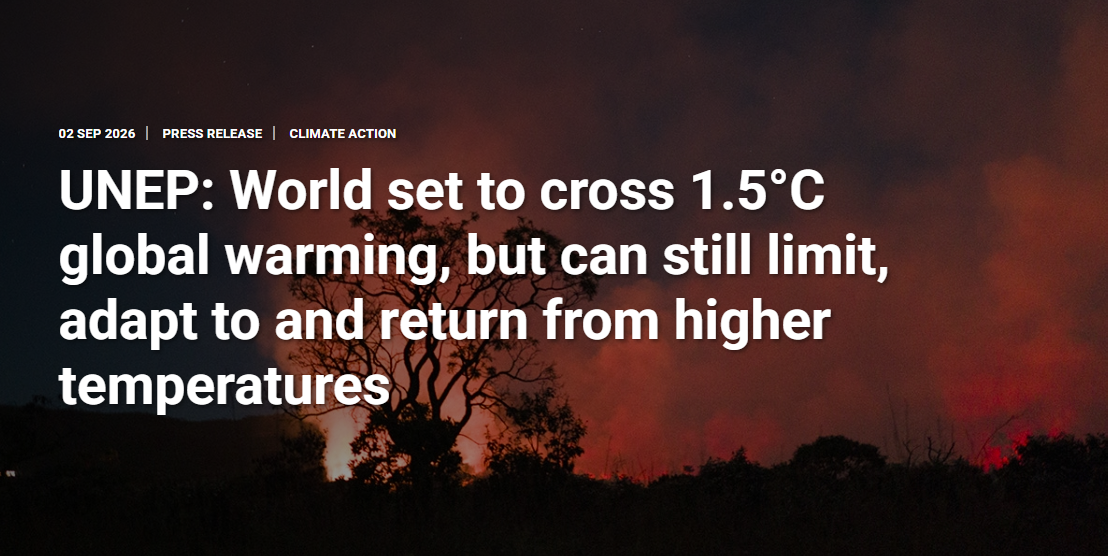
According to a report by the United Nations Environment Program (UNEP) co-authored by Joana Portugal Pereira, a temperature increase of more than 1.5°C above preindustrial levels is unavoidable and will likely occur within the next few years.
Under the most optimistic scenario, global temperatures could peak at around 1.8°C. However, other pathways could result in significantly higher warming. Still, it is possible to reverse the temperature trend by the end of the century through aggressive reductions in emissions.
Beyond 1.5°C, climate risks increase with each additional fraction of warming and each year spent at higher temperatures. This raises the likelihood of severe impacts on ecosystems, food and water security, health, infrastructure, and economies.
The UNEP calls for immediate and sustained cuts in greenhouse gas emissions, including methane, as well as a rapid transition away from fossil fuels. Long-term carbon dioxide removal could help bring temperatures down, but it cannot replace deep emissions reductions.
At the same time, adaptation must accelerate. Building stronger resilience, fostering inclusive governance, securing climate finance, and promoting international cooperation will be essential, particularly for vulnerable countries and communities already facing severe climate impacts.
The United Nations is no longer speaking of preventing the climate crisis but rather of learning how to survive it and minimizing peak temperatures. The decisions and actions taken today will determine how high temperatures rise, how long they remain high, and how much damage can be avoided.
Read the full UNEP report here: UNEP: World set to cross 1.5°C global warming, but can still limit, adapt to and return from higher temperatures